 Chrome Hearts Guide
Chrome Hearts Guide
Chrome Hearts Guide
In the luxury streetwear landscape, the hoodie is more than a casual layer; it is a key piece of design that showcases a brand's approach to silhouette, drape, and material quality. While many contemporary fashion brands prioritize light, fluid materials for their casual wear, Chrome Hearts takes the opposite approach. The brand relies on exceptionally heavy, dense fabrics to create garments that maintain a rigid, structured look. Understanding how fabric weight affects the fit, durability, and details of these hoodies reveals the technical choices behind their unique, boxy shape.
Every piece in the collection is designed to feel substantial, using fabric weight to dictate how the hoodie sits on the shoulders, how the hood holds its shape, and how it holds custom embellishments. For enthusiasts seeking to explore this structured fit, the premium cotton options are a defining characteristic, best observed in the classic chrome hearts hoodie models, which utilize custom-knitted, high-GSM fabrics to achieve a structured profile that remains consistent over years of wear.
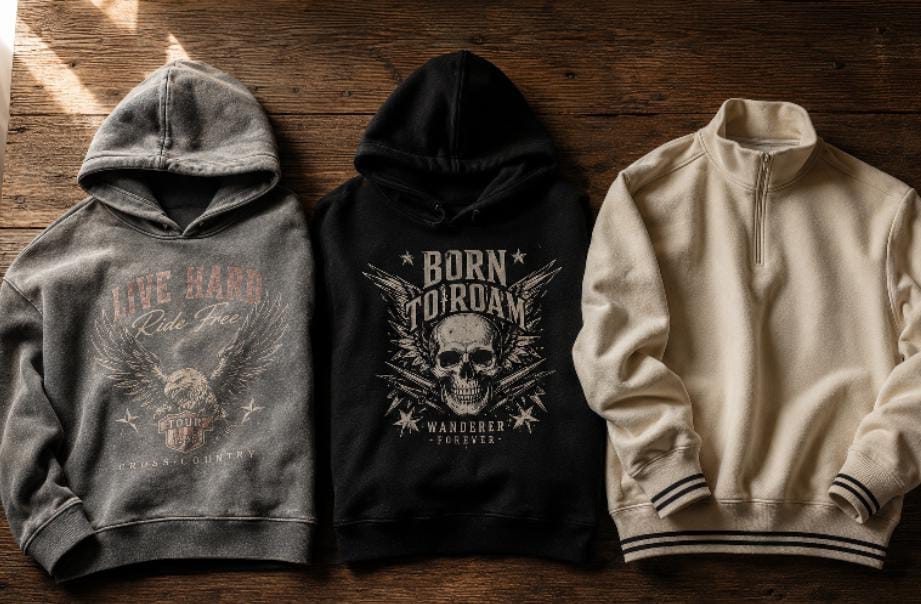
To understand the construction of these garments, one must first look at the metric used to measure fabric density: GSM, or Grams per Square Meter. Standard, mass-market hoodies typically use fabrics ranging from 200 to 300 GSM, which results in a soft, pliable garment that drapes close to the body and collapses easily under its own weight. In contrast, luxury streetwear hoodies generally begin at 400 GSM, with Chrome Hearts frequently utilizing custom-spun French terry cotton that exceeds 500 to 600 GSM.
This high GSM is achieved by knitting long-staple cotton fibers tightly together. This tight knit creates a dense material that resists stretching and wind, while keeping a soft feel against the skin. The weight of this fabric gives the hoodie a natural stiffness, allowing it to hang away from the body to create a distinct, boxy silhouette. This structure does not depend on starch or chemical treatments; it is a natural result of the density and quality of the cotton yarns, ensuring the garment keeps its shape after many wash cycles.
Material Fact: A high-GSM cotton garment behaves like a structural layer, keeping its shape and volume even when styled with heavy jackets or loose-fitting trousers.
The hood itself is one of the most difficult parts of a hoodie to construct correctly. On lightweight hoodies, the hood often collapses flat against the back, losing its shape. To prevent this, Chrome Hearts uses a double-layered construction. Both the outer shell and the inner lining of the hood are made from the same heavy French terry fabric, effectively doubling the material weight around the neck.
This double layering, combined with the dense fabric, creates what designers call the "hood stand" or "hood halo." Instead of falling flat, the hood stands upright around the collar, framing the face and keeping a rounded shape. This design feature is both functional and aesthetic: it protects against wind and cold while contributing to the bold, structured silhouette that defines the brand's look. The weight of the hood also helps balance the rest of the garment, pulling the shoulders slightly back for a comfortable fit.
Another reason for using high-GSM cotton is to support the brand's custom .925 sterling silver hardware. A typical zipper pull or drawstring aglet from the brand is made of solid silver and is much heavier than the cheap aluminum or plastic hardware found on standard clothing. If these silver elements were attached to a lightweight cotton knit, the fabric would sag, stretch, and eventually tear under the weight.
The dense knit of a heavyweight hoodie provides the strength needed to hold these silver components. Heavy-duty zippers, silver eyelets, and solid metal dagger pulls are securely anchored into reinforced seams. The fabric resists the constant pulling of the zipper without warping, ensuring the front closure remains straight and uniform. By using strong fabrics, the brand is able to incorporate jewelry-grade details directly into their everyday streetwear designs.
The fabric weight also plays a crucial role in how prints, embroidery, and leather patches look on the garment. When graphic designs are applied to thin fabrics, the heat and ink can cause the material to warp, resulting in puckered seams and distorted prints. Heavyweight cotton provides a flat, stable surface that handles screen printing, high-density puff printing, and detailed embroidery without distortion.
When applying a complex graphic design, the dense fibers prevent the ink from bleeding, keeping print edges sharp and clean. This stability is especially important for the brand's signature leather cross patches, which are stitched directly onto the sleeves or back of the hoodie. The sturdy cotton supports the heavy leather patches, preventing the surrounding fabric from sagging. This ensures that the mixed-media design—combining cotton, leather, and silver—remains flat and looks clean.
The table below outlines the structural differences, material behavior, and hardware compatibility across different fabric weight ranges commonly used in streetwear production:
| Fabric Weight (GSM) | Material Behavior | Hood Structure & Stand | Hardware Support Capacity | Visual Silhouette |
|---|---|---|---|---|
| Lightweight (150 - 250) | Very soft, highly drapable, low wind resistance | Collapses completely flat against the neck | Incompatible; causes sagging and tearing | Clings to body contours; lacks independent structure |
| Midweight (250 - 350) | Moderate drape, standard warmth, moderate durability | Minimal stand; folds over easily under movement | Supports light aluminum or plastic components only | Standard casual drape with slight shoulder structure |
| Heavyweight (350 - 450) | Dense feel, holds shape, good insulation properties | Moderate stand; holds shape when static | Supports medium metal zippers and light grommets | Slightly boxy fit; drapes away from waistline |
| Ultra-Heavyweight (450 - 600+) | Stiff, highly insulated, excellent wind resistance | Excellent stand; forms a rigid "halo" around collar | Ideal; handles heavy sterling silver zippers and buttons | Highly structured, boxy, independent shape |
Heavy, dense fabrics do not stretch as easily as lighter materials. As a result, hoodies made from ultra-heavyweight cotton can feel slightly tighter initially, especially across the chest and shoulders. When purchasing, it is important to check the specific fit guide; many collectors choose to size up if they prefer a relaxed, oversized look rather than a fitted silhouette.
French terry features uncut loops on the inside and a smooth face on the outside, creating a dense, breathable, and highly stable structure. Brushed fleece has a fuzzy interior that is created by shredding the fibers, which can reduce the fabric's overall density and cause it to lose structure over time. French terry keeps its knit pattern tight, providing better support for heavy hardware and patches.
Yes, all 100% cotton garments are prone to shrinking if exposed to high heat. To protect the structure, fit, and graphics of a heavyweight hoodie, it should be washed in cold water on a gentle cycle and laid flat to air dry. Heat from dryers can warp the dense cotton fibers, distort the screen prints, and shrink the seams.
The ribbing on the cuffs and hem of a heavyweight hoodie is usually reinforced with elastane to ensure it keeps its shape. This tight ribbing holds the bottom of the hoodie at the waist, allowing the heavy fabric above to drape over it. This helps create the signature balloon or boxy fit, while preventing cold air from entering the garment.
The structure and silhouette of a Chrome Hearts hoodie are directly shaped by the weight and density of its fabric. By choosing custom-knitted, ultra-heavy French terry cotton, the brand creates garments that keep a distinct shape, support heavy sterling silver jewelry details, and provide a stable canvas for complex graphics and leather patches. This focus on material strength elevates a simple sportswear design into a durable piece of luxury outerwear.